-
Tosti
29 April 2025 -
The Golden Age of Castrati
20 April 2025 -
Zarzuela
17 April 2025 -

Kama Sutra
11 April 2025
Poet
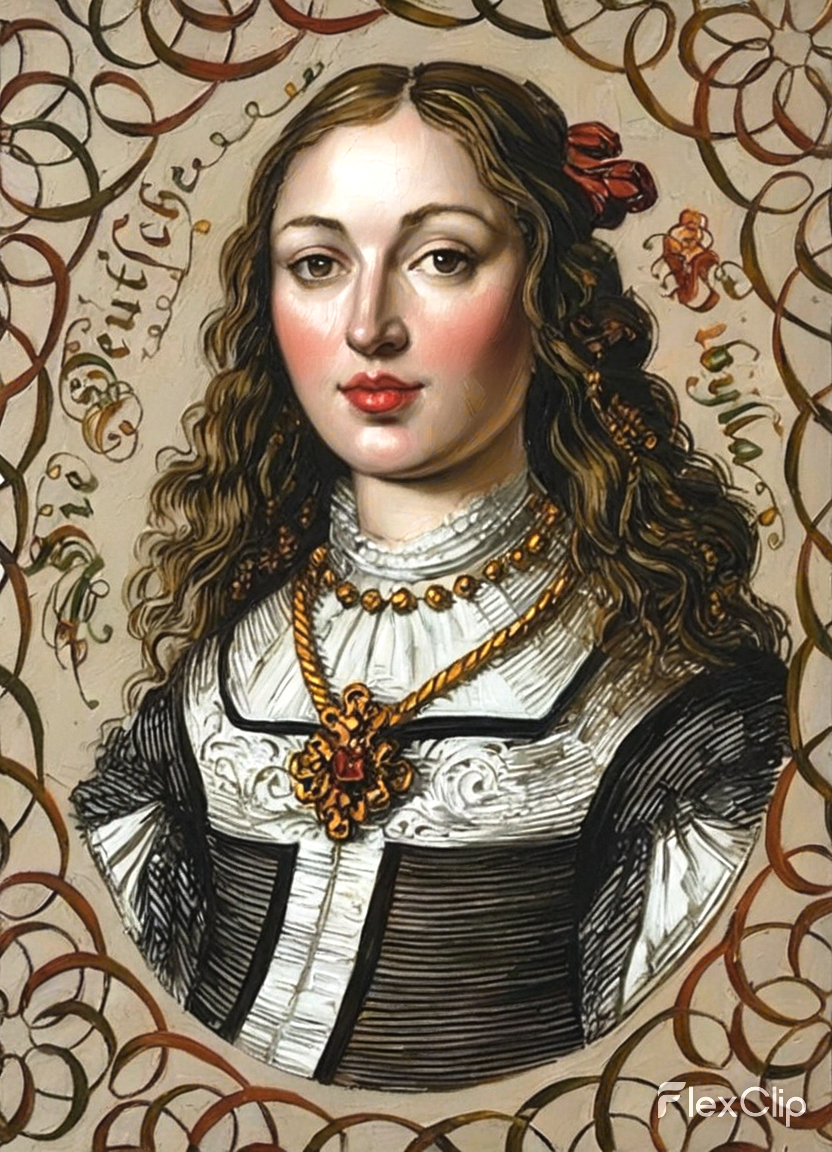
Sibylla Schwarz
German, 14/24 February 1621, Greifswald – 31 July/10 August 1638, Greifswald.
A splendid-looking young woman, would do well in our current society, or rather she might do our current society well. She might also bring her dressmaker back with her!
She was a remarkable German poet whose talent and voice emerged during the turbulent era of the Thirty Years' War. Often referred to as the “Pomeranian Sappho,” she began writing poetry at about 10 years old. She was one of the very few women during the Baroque period who dared to go against taboo and publish her texts, and did so as a teenager. People, events, history.
A child prodigy, she grew up as the youngest daughter of a patrician family in Greifswald, her father the mayor of the town. She received an education from a private tutor, which was unusual for a girl in the 17th century, even for one with wealthy parents. But Sibylla's father recognized and encouraged his daughter's talent. She explained in a letter why she wrote poetry: Not to gain a handful of favour or honour, but out of a love of history, a fascination with poetry, and a desire to practise it. She didn't want to let the words she found disappear into a drawer.
In 1634, when she was 13, the pastor and teacher Samuel Gerlach became aware of her. He introduced her to Martin Opitz's verse school, and she became influenced by him. Samuel Gerlach also served as her private tutor. Ultimately, she entered the avant-garde literary scene of the time. At 17, she may have been better than Goethe or Rilke.
She died at that age after having drunk infected water.
0 comments