-
Tosti
29 April 2025 -
The Golden Age of Castrati
20 April 2025 -
Zarzuela
17 April 2025 -

Kama Sutra
11 April 2025
Composer
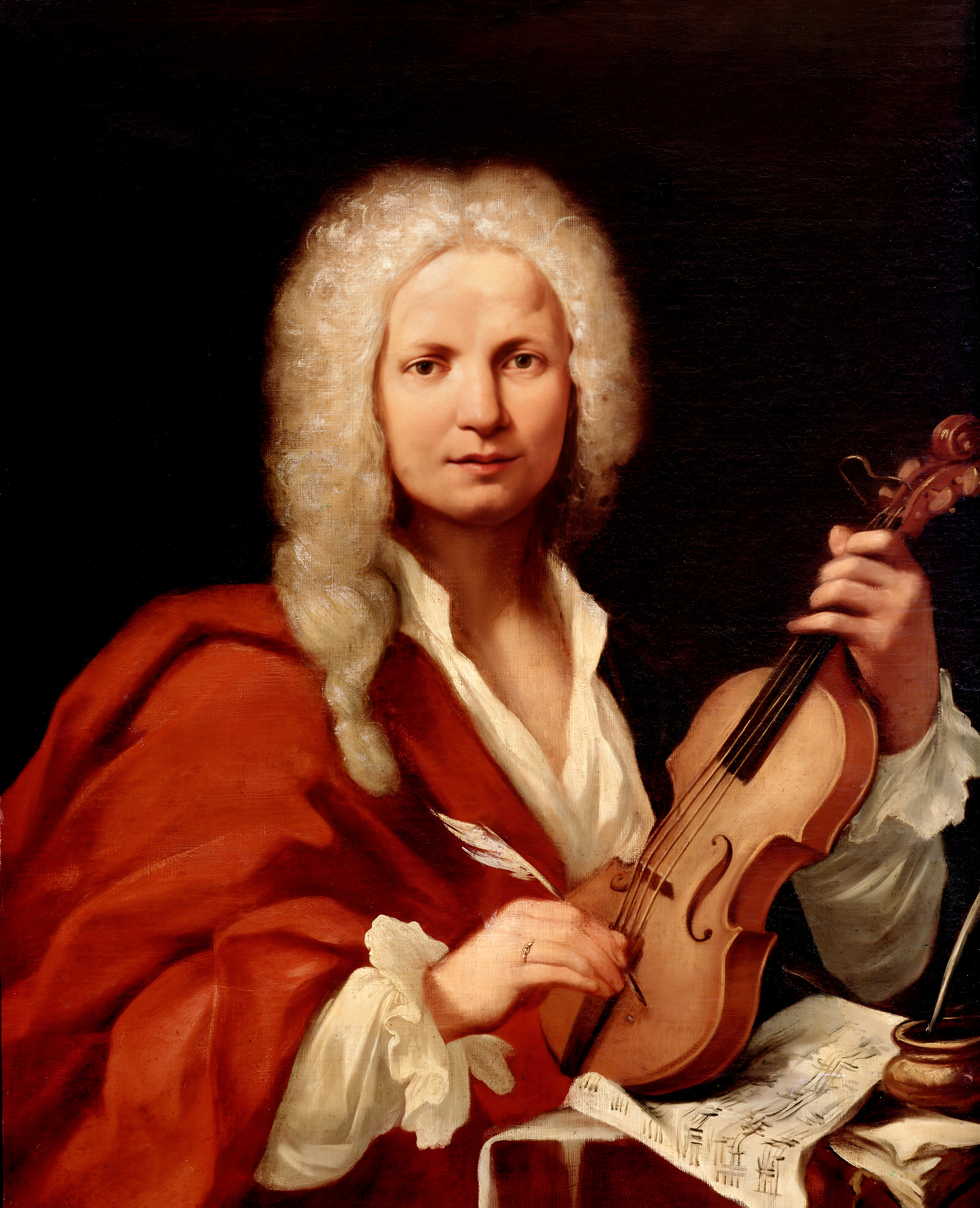
Antonio Vivaldi
Antonio Vivaldi (1678–1741) was one of the most prolific and influential composers of the Baroque period. Born in Venice on March 4, 1678, he was the son of Giovanni Battista Vivaldi, a professional violinist. His father introduced him to music and likely trained him in the violin, an instrument Antonio would later elevate to new expressive heights.
Though his musical talents were evident from a young age, Vivaldi entered the priesthood and was ordained in 1703. Because of his striking red hair, he earned the nickname Il Prete Rosso—"The Red Priest." However, his clerical career was brief; a chronic illness, generally believed to be asthma, left him unable to deliver mass. This "voice problem" effectively ended his liturgical duties, but it did not deter him from continuing in ecclesiastical service in other ways.
That same year, he was appointed as maestro di violino (violin master) at the Ospedale della Pietà, a Venetian orphanage for girls renowned for its musical education. It was here that Vivaldi composed many of his sacred and instrumental works, training and conducting the institution’s all-female orchestra, which became famous throughout Europe.
Vivaldi's output was staggering—over 750 works, including over 500 concertos, about 50 operas (of which around 20 are extant), numerous sacred choral pieces, and a wealth of chamber music. While his instrumental concertos—particularly The Four Seasons—are his most celebrated today, in his own time, he was equally known for his operas and vocal music, which were frequently performed across Italy and beyond.
During his operatic career, Vivaldi formed a close professional relationship with soprano Anna Girò, who became his favorite singer and frequent leading lady. She and her sister lived with him for a time, sparking rumors of impropriety. Vivaldi maintained that their relationship was strictly platonic and spiritual, but the closeness did raise eyebrows within the Church and society.
These tensions, combined with shifting musical tastes and possible financial difficulties, contributed to Vivaldi’s eventual departure from Venice. In the late 1730s, he moved to Vienna, hoping to find favor at the imperial court of Emperor Charles VI, who admired his work. However, the emperor’s sudden death in 1740 dashed Vivaldi’s hopes for patronage.
Vivaldi died in Vienna on July 28, 1741, in relative obscurity and poverty. He was buried in a simple grave, and his music soon faded from public memory.
The modern renaissance of Vivaldi’s music is a remarkable chapter in music history. Despite his immense output, Vivaldi’s music was largely forgotten for nearly two centuries after his death. His resurgence began in earnest in 1926, when a pivotal discovery was made at the Collegio di San Carlo, near Turin. In an effort to fund repairs, the college planned to sell old manuscripts from its library.
Musicologist Alberto Gentili examined the collection and found it contained numerous handwritten Vivaldi manuscripts. Recognizing their value, he convinced a Turin industrialist to purchase them for the National Library of Turin, in memory of his recently deceased son.
These manuscripts had originally been collected in the 18th century by Count Giacomo Durazzo, but how they came into his possession remains unknown. Intriguingly, catalog numbers on the volumes suggested that some were missing. In 1930, the missing manuscripts were located in another branch of the Durazzo family and were added to the Turin collection.
After World War II, Antonio Fana and Angelo Ephrikian founded the Istituto Italiano Antonio Vivaldi. They partnered with the publisher Ricordi to undertake the monumental task of printing Vivaldi’s complete works—over 750 pieces. This printing project was critical: without available scores, musicians could not perform Vivaldi’s works.
Thanks to these efforts, Vivaldi’s music began to be heard again. Since the 1950s, his popularity has grown exponentially, culminating in a global appreciation that would have seemed unimaginable during the years following his death. Today, his music is celebrated for its brilliance, energy, and emotional depth—a testament to the enduring genius of the Red Priest.
0 comments